We spent $2 million testing every Google Maps ranking strategy imaginable.
Not on ads. Not on website redesigns. On pure research.
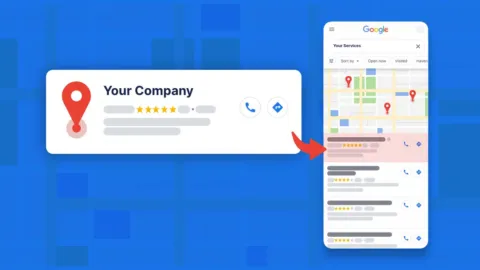
Finding out what actually makes Google rank local businesses in that top 3 Map Pack.
Over three and a half years, we tested on 4,000+ businesses across 200+ industries. HVAC companies, dental practices, law firms, restaurants, auto shops, medical spas, yoga studios, pizza places, you name it.
Here’s what we discovered.
The Question That Started Everything
Why do two nearly identical businesses rank so differently?
Same industry. Same city. Similar websites. Similar review counts.
But one ranks #1 on Google Maps while the other is stuck at #8.
Traditional SEO agencies blame it on domain authority, backlinks, website optimization, or content marketing.
But we kept finding businesses with basic websites and no blog posts ranking #1.
While competitors with expensive sites and content strategies stayed invisible.
Something else was driving rankings. We just had to find it.
The First Breakthrough: Engagement Signals
After analyzing thousands of ranking changes, we found the pattern.
Google doesn’t just rank businesses based on their website or reviews.
They prioritize engagement signals: proof that real people actually interact with your business listing and drive to your location.
- GPS data showing customers navigating to your business.
- Profile interactions.
- Phone calls from your listing.
- Website clicks.
Google’s algorithm works on a simple principle: if lots of real people are choosing this business, it must be worth showing to more people.
And you can generate these signals intentionally.
The 7-Day Test
We developed a system to create authentic human engagement for local businesses.
Real people with GPS-enabled phones driving to business locations.
Genuine interactions with Google Business Profiles.
Not bots. Not software tricks. Real human activity that Google’s algorithm recognizes as legitimate popularity.
Then we tested it. Across dozens of cities. Hundreds of industries. Thousands of businesses.
The results were consistent.
Early in the week: Businesses saw initial movement. Rankings shifted a few positions as Google detected the increased activity.
Mid-week: Movement accelerated. Businesses climbing from outside the top 10 into the top 5. The algorithm was responding to the engagement pattern.
End of week: Many businesses hit the top 3 map pack. Some locked into the #1 position.
A yoga studio went from #11 to the top 3 in under a week. An HVAC company that had been stuck in the middle of page one jumped into the map pack. A dental practice that couldn’t break into the top 10 suddenly appeared at #2.
We weren’t getting lucky. We’d found what actually moves local rankings.
What Matters for Google Maps Rankings
After 4,000+ tests, here’s what we learned definitively impacts local rankings:
Volume matters. A handful of engagement signals barely registers. Consistent daily activity creates measurable movement.
Consistency matters. One-time efforts produce temporary results. Sustained engagement locks in long-term rankings.
Authenticity matters. Google’s algorithm detects and ignores artificial signals. Only genuine human activity in the right sequence moves rankings.
Your website matters less than you think. A functional website is necessary. But we’ve seen basic 5-page sites outrank competitors with expensive custom designs.
Reviews are table stakes. You need at least 10 reviews to be competitive. But having 500 reviews won’t get you ranked if you lack engagement signals.
Recent activity weighs heavy. Google prioritizes businesses with current engagement. This week’s activity matters more than last month’s.
What We Learned About Different Markets
After testing across 200+ industries, results depend more on your local competition than your specific business type.
A restaurant in a smaller market might see faster movement than one in a major city with 50+ competitors.
A law firm in a less saturated area could hit top 3 quicker than one in an extremely competitive market.
Same strategy. Different competitive landscapes.
The businesses that saw the fastest results had their Google Business Profile properly set up, a functional website, and at least 10 reviews.
The ones that took longer were usually fighting in heavily saturated markets where 20+ businesses competed for the same top 3 spots.
But here’s what mattered: it worked across the board.
Whether you run an HVAC company, a dental practice, a law firm, or a restaurant, if you meet the basic requirements, you can rank.
What This Means for Your Business
Most local businesses stay invisible because they’re optimizing for the wrong ranking factors.
They’re writing blog posts that don’t impact local search. Building backlinks that barely matter for “near me” searches. Waiting months for results that never materialize.
Meanwhile, businesses ranking #1 are generating engagement signals that prove to Google they’re the popular choice in their area.
The difference between #8 and #1 isn’t your website design or content strategy. It’s whether Google sees proof that real people choose your business.
After three and a half years and $2 million in research, we’ve built a system that generates those signals at scale. We’ve used it to help 4,000+ businesses rank in the top 3 on Google Maps.
And we’ll prove it works for your business before you pay anything.
Get Ranked Top 3 on Google Maps for Free in Under a Week (No Credit Card Required) →
The experiment is over. We know what works. Now it’s your turn to benefit from it.