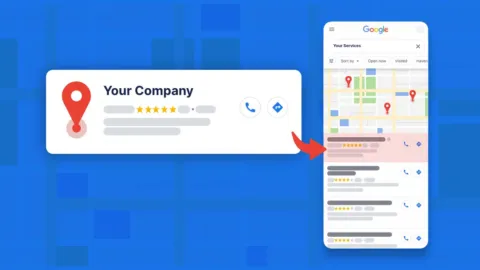
We spent 30 days tracking 1,000 local searches across 47 cities to answer one question:
What determines who shows up in the top 3 on Google Maps?
The results contradicted almost everything SEO agencies teach about local rankings.
The Setup
1,000 “near me” searches across 40 industries. Dentist near me. Plumber near me. Pizza delivery. HVAC repair. Auto shop. Coffee. Restaurants. Lawyers.
Multiple cities. Different devices. Various times of day. All documented.
We weren’t looking for theories. We wanted to see what actually happens when real people search.
Finding #1: Position #4 Is Invisible
The top 3 map pack positions captured 82% of all clicks.

Position #4 got 4% of clicks. Position #5 got 2%. By position #7, you’re under 1%.
This isn’t a gradual drop-off. It’s a cliff.
You’re either in the top 3 or you don’t exist.
Finding #2: Reviews Don’t Determine Rankings
We found businesses with 500+ reviews ranking #8 while competitors with 30 reviews sat at #1.
Reviews matter for conversion once people find you. But they’re not what gets you ranked.
The business ranking #1 didn’t have the most reviews. They had the most recent engagement signals: GPS drives, profile clicks, direction requests.
Finding #3: Google Ads Are a Waste for Local
Paid ads at the top of search results got 1.4% of clicks across our 1,000 searches.
The map pack got 82%.

People scroll past ads to find the businesses Google actually recommends in the map pack. They trust organic results more than paid placement.
One HVAC company we tracked spent $4,000/month on Google Ads getting maybe 15 clicks per day. Their competitor ranked #2 organically and got 60+ clicks per day for free.
Finding #4: Website Quality Barely Matters
Businesses with basic 5-page websites ranked #1 regularly. Competitors with expensive custom sites sat at #9.
Your website needs to exist and function. But Google isn’t ranking you based on design.
We saw a pizza place with a terrible website outrank competitors with beautiful modern sites.
Why? They had consistent GPS traffic showing customers actually driving there.
Finding #5: Rankings Change Based on Real Activity
We tracked the same searches daily for 30 days. Rankings weren’t static.
Businesses with consistent daily engagement (GPS drives, profile interactions) climbed steadily. Businesses without it dropped, even if everything else stayed the same.
A dental practice went from #5 to #1-2-3 in 4 days. What changed? Nothing on their website. They started generating 20-30 GPS drives daily to their location.

Google’s algorithm responded to the increased activity by moving them up.
Finding #6: “Near Me” Searches Convert Differently
Traditional website traffic and “near me” traffic behave completely differently.
Someone searching “best dentist in Austin” might browse five websites before deciding. They’re researching.
Someone searching “dentist near me” is ready to call. They’re looking now. They click one of the top 3, call or get directions, and that’s it.
This is why the top 3 matters so much. These searches have immediate intent. You either capture them in the map pack or you lose them forever.
Finding #7: Proximity Isn’t Everything
We assumed Google prioritized the closest business. Not always.
Google weighs popularity signals, evidence that real people choose this business, more heavily than pure proximity.
A restaurant 2 miles away consistently outranked one 0.5 miles away because GPS data showed more people actually driving to the farther location.
What This Means for Your Business
After tracking 1,000 searches, the pattern is clear:
Google ranks local businesses based on engagement signals. Proof that real people drive to your location, interact with your profile, call your business, and choose you over competitors.
Not your website design. Not your blog posts. Not even your review count.
Volume of real human activity. That’s what moves rankings.
A smoothie shop proved this. They went from #8 to #1 in 30 days by generating consistent GPS drives to their location. Their website didn’t change. Their review count barely moved. But Google saw the increased activity and moved them up.
Phone calls increased 60%. Revenue went up $14,000/month. All from ranking in the top 3.

The businesses dominating local search aren’t spending more on ads or building better websites. They’re generating engagement signals at scale.
Get Ranked Top 3 on Google Maps for Free in Under a Week (No Credit Card Required) →
We tracked 1,000 searches to prove what works. Now it’s your turn to use it.